– Candidate filing period for the November election is open

The candidate filing period for elective offices in the November 3, 2026, General Election opened Monday, July 13, 2026.

Candidate forms will be available only during the official filing period and must be completed and submitted by the deadline of 5 p.m. on Friday, August 7, 2026.

Santa Cruz County Elections:

Candidate filing services will be available at two locations:

Walk in: 701 Ocean St, Room 310, Santa Cruz
By appointment only (Tuesdays and Thursdays) until August 6: 500 Westridge Dr, Watsonville. To book an appointment at our Watsonville location please call 454-2423 or 454-3528 or book your appointment online using this booking calendar.

Please call our office prior to arriving at our Santa Cruz office or to your Watsonville appointment to ensure you have all the necessary documents.

Candidate Resources and Forms

None of the offices on the November 3, 2026 Statewide General Election ballot have a nomination requirement, so all you need to do is come to our office where you will bring in (or complete in our office), the below documents. Our office will review them and then we will prepare your Declaration of Candidacy.  On it you will confirm your name is spelled correctly, we have all the correct information, you will state your qualifications to run for office, and you will take an oath to officially become a candidate. 

Below is the list of important resources as well as the documents you may need to complete when you file to be a candidate.  Each form is named and has a brief description of what it is used for and why you may need to complete it as part of your candidate journey.

  • Candidate Checklist – This is a list for you to use to ensure you keep track of the documents that need to be filed in order to become a candidate.
  • Candidate Manual – This manual has a ton of information on becoming a candidate. It describes what you need to file, what is a candidate statement, campaign finance, and so much more!
  • Candidate Information Forums – This flyer lists the dates, times and locations for the candidate information forums being held this month. The local city clerk is co-hosting the city council forums. Attend one or all of them!

FPPC forms for candidates: [These forms may be required in every county]

  • Form 410 – This form organizes a campaign committee. It is filed with the California Secretary of State.
  • Form 460 – This form is what campaign committees file according to the campaign finance filing schedule.
  • Form 470 – This form must be filled out by candidates that are not creating a campaign committee.
  • Form 501 – All candidates need to fill out this form – it is your intention to run for office.  It needs to be filled out each election.
  • Form 700 – All candidates need to fill out this form – it lists your economic interests. If you are a current Form 700 filer with the County of Santa Cruz, please let us know and we can allow you to file online through your existing login.

Ballot Designation Worksheet – Your ballot designation is the up to three words that list your principal profession, occupation or vocation.  It appears on the ballot under your name.  This worksheet is where you list your preferred designation and two alternates.  You need to justify why you can use that designation. For example: Teacher/Parent is the ballot designation.The justification would be – I have taught third grade at Boardwalk School since 2010. Call Paula Principal at 831-555-5555 for verification. I became a parent in 2004 when my daughter was born. Call Other Parent at 831-444-4444. There are questions to answer and a place for you to sign on page 2 of the worksheet.

Candidate Statement Agreements:

  • Local – This agreement needs to be signed and filed with your 200 (or less) word candidate statement of qualifications. This is for local candidates running for supervisor, school or special district offices. 
  • State – This agreement needs to be signed and filed with your 250 (or less) word candidate statement of qualifications.  This is for candidates running for Congressional or Assembly offices. 

*** Please note, if you are planning on submitting a Candidate Statement you must file it at the same time you sign your Declaration of Candidacy. The statement cannot be filed after. ***

Internet Waiver – We will automatically post on our website your name and the office you are running for.  If you would like us to list contact information such as website, email, phone number, or address, you will grant us permission to post that information.

Code of Fair Campaign Practices – This optional form pledges that you will run a decent, fair and honest campaign.

Political Signs – If you are planning on having campaign signs, you must register with the CA Department of Transportation.  The County does not set the regulations for political signs. Click here for information and the required forms.

Other Forms – Statement of qualifications (some offices), voter registration confidentiality and next steps. Each of these forms will be prepared by our office at the time of filing.

https://votescount.santacruzcountyca.gov/Default.aspx?TabID=12099

County of Monterey Elections:

Monterey County Elections Department, 1441 Schilling Place – North Building, Salinas, CA.
Official nomination documents will be available Monday through Friday, 8 a.m. to 5 p.m., during the filing period

Candidates seeking a city office must file their nomination documents with the
appropriate City Clerk.

In addition to candidate filing services at the Monterey County Elections Office throughout the filing period:
Candidate Filing appointments will be available at the following locations during the specified dates between 11 a.m. and 5 p.m.

  • — Wednesday, July 29, 2026, at Castroville Library, 11160 Speegle St., Castroville
  • — Thursday, July 30, 2026, at Carmel Valley Library, 65 W. Carmel Valley Rd, Carmel Valley
  • — Friday, July 31, 2026, at King City Library, 402 Broadway St., King City

Interested candidates should schedule an appointment via email at
CandidateServices@countyofmonterey.gov or by phone (831) 796-1499.
Monterey County Candidate Guidelines, with information on which offices are up for election and requirements, are available at www.CountyofMonterey.gov/Elections.
https://www.countyofmonterey.gov/home/showpublisheddocument/147061/639192691019570000

San Benito County Elections:

Interested in Running for Office? 

In general, all candidates for elected office must meet the following requirement:

  • Registered to vote at an address within the jurisdiction of the office. For example County Supervisors must reside within the boundaries of the district for which they are running; the Mayor of Hollister must reside within the city limits.

Some elected offices have specific qualifications for candidates. If an office has specific qualifications, click the link next to the office titled “Qualifications” to learn more.  If there are no specific qualifications, the link will not be displayed.

You may view our complete Candidate Handbook here.

You can pre-register for your candidate filing paperwork here.

 You may see upcoming candidate filing events (deadlines) below, or you may download a PDF version of the Candidate nomination summary calendar of events

https://www.sanbenitocounty-ca-cre.gov/elections/candidates-campaigns/november-3-2026-statewide-general-election

– Declining enrollment, surplus schools: MPUSD Del Rey Woods and Marshall Elementary Schools as a case study

By Nina Beety

Monterey Peninsula Unified School District, along with many school districts faced with shrinking enrollment and decreased revenues, is considering permanently closing schools and selling the properties. Currently, MPUSD’s 7-11 Committee is discussing the possibilities.

The most important part of MPUSD’s evaluations must be which school properties are safest and which are adjacent to hazards as a criteria for retention. It is not clear that safety is part of their considerations past or present. Schools with known or newly discovered toxins or hazards must be the first ones to be closed, and children moved to safer schools, even if they must be transported by school bus every day. Hazards can include toxics contamination, noise, air pollution, microwave antennas and cell towers, electrical substations, and high voltage lines.

Del Rey Woods Elementary School, at Plumas Avenue in Seaside, is one such hazardous location. It is located along PG&E’s high-voltage transmission line corridor, and children attend classes and play in the playground in those elevated EMF fields. It must be closed.

Research has shown that children exposed to powerline frequencies are at risk of serious life-threatening illnesses especially leukemia. The students’ exposure is compounded by the Wi-Fi in the school. This is not a safe environment for children or school staff, including staff members who are pregnant, but the school district has ignored this situation for years, with the current superintendent even sending his children to the school.

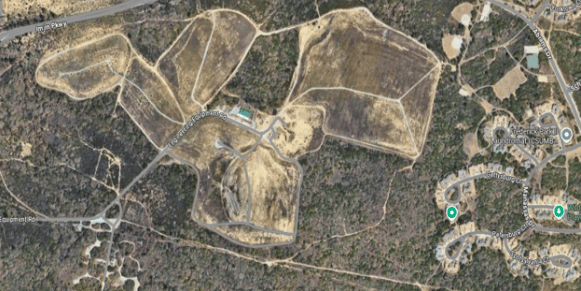
Marshall Elementary School on Normandy Road is another hazardous site. It is located on the Fort Ord National Priorities List Superfund site now part of Seaside, and sits below the large PFAS dump on Numa Watson Road which the Army only acknowledged in 2022. For at least 10 years until the 1990s, fire crews would purge their trucks of fire-fighting foam once a month as well as practice spraying foam at that location. It would go into the storm drains and into the Monterey Bay, as well as drain downhill, drying out and becoming dust to be carried by the wind to nearby homes and Marshall. Chartwell School, a private school, was built in 2006 immediately adjacent to the dump. When Chartwell School applied to expand the school last year, Seaside and Chartwell learned about the PFAS contamination for the first time from the public. So did MPUSD’s superintendent PK Diffenbaugh who attended the planning commission hearing to support Chartwell’s expansion. He has taken no public action in the year since learning of the dangerous contamination affecting Marshall Elementary.

Marshall should be shut down pending a full investigation of PFAS and other contaminants in and around the area due to the risk to students and staff. The school district must also close Del Rey Woods School. They must move all these students to the former Monte Vista Elementary School on Soledad Drive in Monterey, which they have shut down, and to other campuses. The former Monte Vista is a much safer environment for children and school staff than many other locations. It is not near any cell towers or high voltage lines.

When the district made their decision to close Monte Vista, Foothill, and other schools in 2021, it was without proper consideration of critical factors. The board and staff continue to ignore them and their responsibility to student and staff safety first. The school district needs to go back to the drawing board. And the district must wire all internet connections and eliminate wireless internet in all its schools.

Sources:

https://ehsciences.org/powerlines-emf-elf-magnetic-fields-health/
The Health Effects of EMF, ELF and Magnetic Fields from Power Lines and Electricity

https://ehsciences.org/major-wins-for-childrens-health-u-s-school-districts-are-opposing-high-voltage-power-lines-the-49ers-may-relocate-away-from-the-substation/
Nationwide Moves To Protect Children’s Health: U.S. School Districts Are Opposing High Voltage Power Lines + the 49ers May Relocate Away From the Substation!

https://peteranthonycowan.substack.com/t/49ers-emf-injury-series
Peter Cowan “49er EMF Injury Series”

https://peteranthonycowan.substack.com/p/reading-the-leaves-the-trees-near
Reading the Leaves: The Trees Near the 49ers’ Substation Knew First

Also, on Temecula Valley Unified School District:
https://ehsciences.org/wp-content/uploads/2026/06/Temecula-Valley-Unified-School-District-Resolution-Opposing-the-SDGE-Golden-Pacific-Powerline-Project-Near-School-Facilities.pdf

PFAS contamination near Marshall Elementary School:
https://aec.army.mil/Portals/115/PFAS/POM_PASI.pdf?ver=50d44b8fvCrh6O006dqqPQ%3D%3D
Final Preliminary Assessment of Per- and Polyfluoroalkyl Substances V2, February 2022
4.3 Readily Identifiable Off-Post PFAS Sources, p. 11

https://www.militarypoisons.org/latest-news/pfas-at-the-former-fort-ord
Excerpt: Former nozzle testing area near the Chartwell School

Historic amounts of carcinogen PFAS foams were sprayed here.

Fire department personnel conducted training, fire hose and tank flushing, and nozzle testing in a paved area near the Chartwell School on Numa Watson Road until the 1990s, before the property was transferred to the City of Seaside.

Fire department personnel were trained to perform nozzle testing with AFFF to ensure optimal flow and release of the AFFF mixture. Nozzle testing involved spraying AFFF through fire equipment. Fire equipment training also included arc training to maximize the arc, reach, and distance covered by AFFF in an emergency response.

Training took place about once a month for at least 10 years, releasing approximately 30 gallons of AFFF concentrate during each event. The nozzle testing area was a large asphalt parking area with storm drains that lead to channels that discharge into Monterey Bay.

Approximately 3,600 gallons of AFFF concentrate was used here. Usually, firefighters mixed 3% concentrate with 97% water. A single event using 30 gallons would be mixed with 970 gallons of water to produce 1,000 gallons of foam.

On August 19, 2024, in one of the greatest PFAS accidents in the nation’s history, 1,450 gallons of PFAS-AFFF concentrate spilled from Hangar 4 at the former Brunswick, Maine Naval Air Station. In November 2022, there was another historic release of approximately 1,300 gallons of AFFF concentrate at the Red Hill Bulk Fuel Storage Facility at Joint Base Pearl Harbor-Hickam.

These historic releases don’t match the cumulative tragedy on Numa Watson Road.

Physicians for Safe Technology
https://mdsafetech.org/wi-fi-in-schools-2/
– Wi-Fi in Schools
https://mdsafetech.org/cell-tower-health-effects/
– Cell Tower Radiation Health Effects

Military Poisons
www.militarypoisons.org
– search “Fort Ord” for articles on base contamination

– July 23, EPA answers questions on Vistra Moss Landing battery fire cleanup – Castroville Farmers Market

The US Environmental Protection Agency will have a booth at the North County Farmers’ Market July 23 on the Vistra battery storage fire and cleanup. They will have English and Spanish speakers .

Thursday, July 23
2-7 pm
North County Recreation Center
11261 Crane St.
Castroville
Free

https://www.epa.gov/ca/moss-landing-vistra-battery-fire

For community and independent information and investigations:
https://neveragainmosslanding.org

Watch the presentation by Dr. Kerstin Wasson on what Moss Landing Marine Laboratory, San Jose State University found
Monterey County Board of Supervisors hearing – beginning at 2:15:25
3:06:43 Dr. Kerstin Wasson, Ph.D EMBER ( Estuary Monitoring of Battery Emissions and Residues resulting from the Moss Landing battery fire)
4:20:12 Dr. Wasson answered questions
EMBER Powerpoint presentation 

– Fort Ord Superfund site bus tour and open house, July 25

Saturday, July 25
9 am – 1 pm
US Army open house with bus tours of the former Fort Ord
Building 4522 Joe Lloyd Way
Seaside

Technical staff will be present – “learn the latest about the US Army Fort Ord Environmental Cleanup”
ATSDR staff will also be present to give an update on their re-evaluation of 1985-1994 drinking water exposure

Free bus tours at 10 am and 11:30 am; space is limited, sign-ups are available to ensure you have a seat.

Note: this is a National Priorities List Superfund site.

Ads in Monterey County Weekly have information as well.

Questions? US Army BRAC Community Relations
831-393-1284 or 800-852-9699

– Salinas Obon Festival, July 26

Salinas Obon Festival
Buddhist Temple
14 California Street, Salinas

Sunday, July 26
12 noon – 5 pm

Celebrate the traditions of Obon, honoring ancestors and expressing gratitude through community, culture, food, and dance. Demonstrations include martial arts, bonsai, ikebana, a tea ceremony. The evening concludes with the Obon Odori dance.

Parking is limited.  
Shuttle from Salinas Adult School
20 Sherman Dr. 

Free event; donations are gratefully accepted.

For more information: https://www.btsalinas.org/2026-salinas-obon-festival

– Response to ATSDR water report: Fort Ord health questions not answered by limited report

Agency for Toxic Substances and Disease Registry (ATSDR) report https://montereybaymatters.org/2026/07/09/new-federal-report-on-1985-1994-fort-ord-drinking-water/

It evaluates only nine chemicals identified in available drinking-water records…It does not assess pre-1985 drinking-water exposures, post-1994 redevelopment, vapor intrusion into occupied buildings, PFAS contamination, contaminated soils, or other potential routes of exposure.

ATSDR will be present at the July 25 Fort Ord Workshop and Open House to provide an update on their report — see related post and calendar.

By Julie Akey
Published by the Monterey Herald
July 13, 2026

Sean Tubo’s July 10 Monterey Herald article, “New study says Fort Ord water posed no public health hazard,” accurately reports the conclusions of ATSDR’s updated Health Consultation. However, the ATSDR answers only a narrow question: whether a limited number of contaminants found in drinking water between 1985 and 1994 were likely to pose unacceptable health risks. The ATSDR report does not answer the broader question that thousands of former soldiers, military families, civilian employees, and Monterey County residents have been asking for decades: Did contamination at Fort Ord sicken and kill many?

The agency limited its evaluation to 1985 through 1994 largely to remain consistent with an assessment it conducted in 1996. That may satisfy an administrative objective, but it is not a scientific one. Fort Ord remained occupied after 1994, and thousands of people continued to live, work, attend school and recreate there for years after the Army closed the base.

I know because I was one of them.

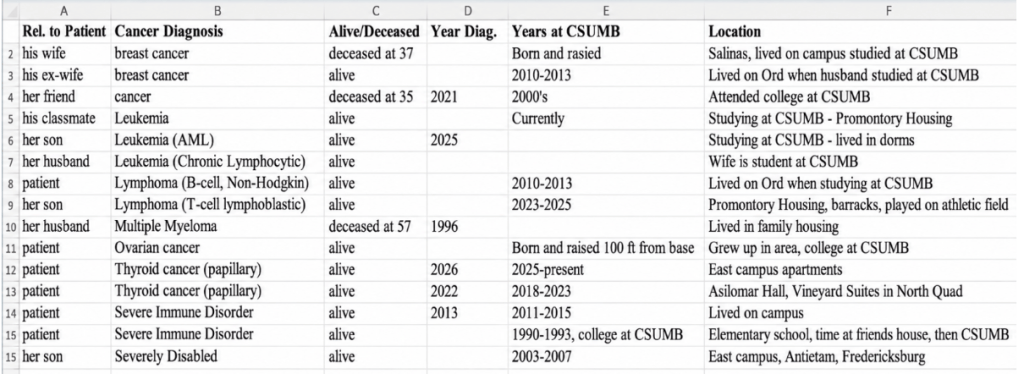
I lived at Fort Ord in 1996 and 1997. Twenty years later, I was diagnosed with Multiple Myeloma. Since then, I have identified 138 people who lived or served at Fort Ord and later developed the same blood cancer. Altogether, I have compiled a database of nearly 2,000 former residents and military personnel suffering from cancers and other serious illnesses associated with chemicals known to have contaminated the installation. Most of these diseases are associated with military activities.

The report also acknowledges another major limitation: there are virtually no drinking-water records before 1985. Without those records, ATSDR cannot evaluate exposures during much of Fort Ord’s operational history. That absence of data should never be interpreted as evidence that harmful exposures did not occur. It simply means we do not know.

Nor does the report examine every contaminant that may have been present. It evaluates only nine chemicals identified in available drinking-water records. As a result, its conclusions apply only to those contaminants, during that limited period, under the specific exposure assumptions used by the agency.

Perhaps the most significant unanswered question involves vapor intrusion.

ATSDR openly acknowledges that indoor-air and sub-slab sampling are needed to determine whether toxic vapors migrated from contaminated groundwater and soil gas into occupied buildings. Because those data do not exist for the period studied, the agency states it cannot determine whether people were exposed through this pathway.

This is an extraordinary admission.

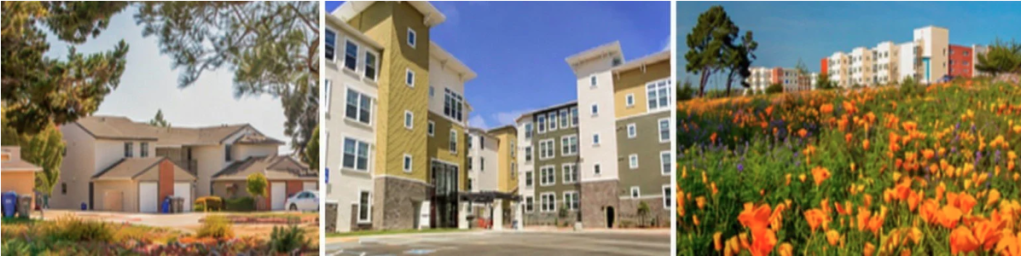
Today, large portions of the former Fort Ord have been redeveloped into neighborhoods, apartment complexes, schools, university facilities, athletic fields, offices and retail centers. Many sit above documented groundwater plumes containing trichloroethylene (TCE), tetrachloroethylene (PCE), carbon tetrachloride, and other volatile chemicals.

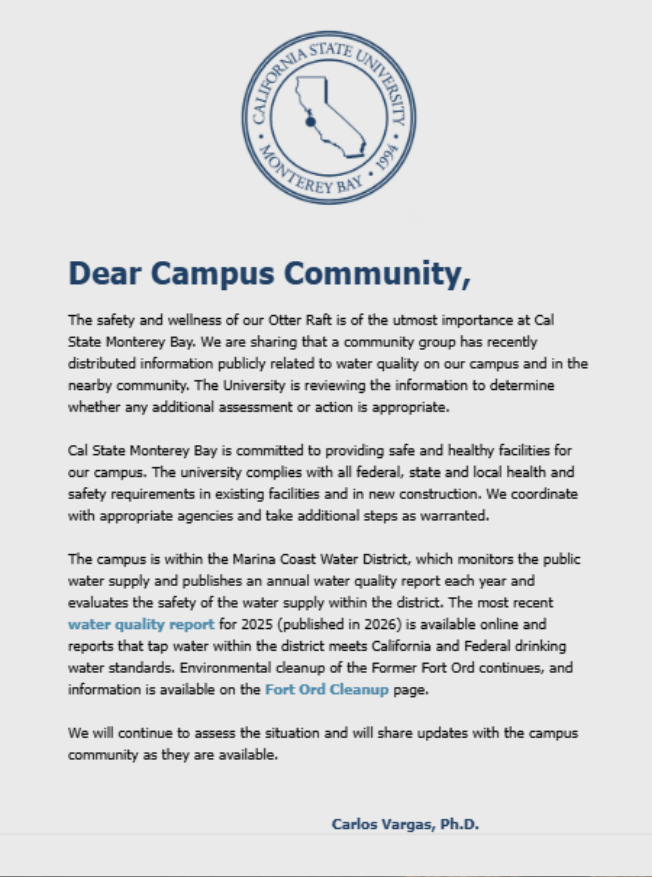
At The Dunes on Monterey Bay, soil-gas investigations continue to detect elevated concentrations of TCE and PCE beneath a busy commercial development. Yet comparable investigations have not been conducted beneath many residential neighborhoods or student housing at Cal State Monterey Bay, located above documented groundwater contamination.

The reported outdoor concentrations of PCE (tetrachloroethylene) and TCE (trichloroethylene) are exceptionally severe for an open-air pedestrian environment. Employees and regular shoppers may be at risk.

Vapor intrusion is not simply a historical concern. It represents a current exposure pathway affecting people who live, work, shop, and study on the former base today.

PFAS contamination presents another major gap. Because these “forever chemicals” were not monitored in drinking water during the 1985-1994 period, ATSDR correctly concludes that it cannot evaluate potential health risks from PFAS exposure. But that should not be misunderstood as evidence that PFAS were absent.

The report does not evaluate every contaminant, every exposure pathway, or every period of Fort Ord’s history. It does not assess pre-1985 drinking-water exposures, post-1994 redevelopment, vapor intrusion into occupied buildings, PFAS contamination, contaminated soils, or other potential routes of exposure.

ATSDR should evaluate post-1994 exposure scenarios, including neighborhoods, schools, university facilities, athletic complexes and commercial developments built on the former installation. It should recommend comprehensive indoor-air testing where groundwater plumes remain beneath occupied buildings. It should continue searching for pre-1985 environmental records and support investigations into PFAS and other contaminants that could not be evaluated because historical monitoring data are missing.

For thousands of former Fort Ord residents and veterans, this report is not the end of the story. It is a reminder of how much we still do not know—and why the investigation must continue.

Julie Akey is a U.S. Army veteran who served at Fort Ord. Akey, who now lives in Ohio, has cancer. She was featured in an Associated Press story investigating pollution at Fort Ord.

https://www.montereyherald.com/2026/07/13/guest-commentary-fort-ords-unanswered-health-questions/

For lists of contaminants known or likely to be used at Fort Ord and other investigations, including FOCAG documents: https://montereybaymatters.org/fort-ord/

– Monterey County: General Plan Environmental Justice update, comments due July 31

From County of Monterey:

The public review period for the Draft Environmental Justice Element has been extended through Friday, July 31, 2026.

The Environmental Justice Element is required by state law as included in the County of Monterey General Plan to identify disadvantaged communities within the unincorporated County area. Environmental justice goals, policies, and objectives to reduce unique or compounded health risks are required to include reduction of pollution exposure, improvement of air quality, the promotion of public facilities, food access, safe and sanitary homes, physical activity, civil engagement in the public decision making process, and prioritize improvements and programs that address the needs of disadvantaged communities.

Draft Environmental Justice Element:
https://montereyclimateaction.konveio.com/county-monterey-draft-environmental-justice-element

[The county has also prepared community guides based on some feedback from specific areas]

Community guides are available in English and Spanish.

  • Please submit your comments to the department at the following address:
    County of Monterey Housing and Community Development Department
    Attn: Edgar Sanchez, Project Planner (English/Español)
    1441 Schilling Place, South 2nd Floor Salinas, California 93901
  • Or Via Email to: GeneralPlanUpdates@countyofmonterey.gov
  • For questions, please contact Edgar Sanchez by phone at (831)783-7508 (English/Español)

Use the above email address to be added to the distribution list. In the subject line, write: Environmental Justice Element

https://www.countyofmonterey.gov/government/departments-a-h/housing-community-development/planning-services/advance-planning/ordinances-plans-under-development/general-plan-elements-update-environmental-justice-element-ref220017-lrpwp-task-no-21-10

– Martinelli’s no-contract: crisis for SC County apple farmers and their trees

Santa Cruz County is famous for its apple orchards, including heirloom species. Some of these orchards are 100+ years old. The land is fertile, and the water isn’t contaminated with industrial waste such as in other areas. County residents are well aware of the rich and long agricultural legacy of this community, and much of it is organic.

Martinelli’s is a well-known family-owned company selling apple juice and cider. Who hasn’t seen its sparkling apple cider at parties? And it’s based right here in the Monterey Bay area. It is a monopoly, however, which has reportedly been an issue for many years in pricing and contracts, limiting the options of local farmers.

But now, Martinelli’s has refused to renew contracts with local apple farmers, transferring focus to out-of-the area farms with “cheaper” apples. The company and its family have become distant from the farmers and trees that built its brand, and disconnected from the well-being of this community, its land, and its economy.

Faced with no market for their premium apples and no income, farmers have an emergency and are scrambling for solutions. Some have done the drastic, horrifying measure of cutting down their apple trees, and leasing the land to berry farmers. Others are investigating options, including Pick-Your-Own, and farmers markets.

The battery storage facility proposed on Minto Road would be on an apple orchard. Are urban sprawl, data storage centers, and lithium ion battery facilities the destructive future for this paradise?

Support your local farmers and support these beautiful, life-giving trees. Eat local apples. Contact the Santa Cruz County Board of Supervisors and the Farm Bureau. Ask what you can do to help. Don’t buy Martinelli’s. Make your voice heard. Preserve your community.

Also see “As Martinelli’s cancels contracts, Watsonville apple farmers lose their biggest buyer – and a way of life”, Lookout Santa Cruz, June 1, 2026
https://lookout.co/as-martinellis-cancels-contracts-watsonville-apple-farmers-lose-their-biggest-buyer-and-a-way-of-life/story

Interview with farmer Freddy Menge, Community Matters, KSCO, July 17, 2026
http://shows.zbsradio.com/20260717/404e7a78316823e.mp3

Santa Cruz County Board of Supervisors
BoardOfSupervisors@santacruzcountyca.gov

Santa Cruz County Farm Bureau
sccfb@sbcglobal.net

EcoFarm Alliance
info@eco-farm.org

– Guest Freddy Menge: Growing Tree Fruit in Santa Cruz County…What’s in the Future? KSCO 2 pm, July 17

See https://lookout.co/as-martinellis-cancels-contracts-watsonville-apple-farmers-lose-their-biggest-buyer-and-a-way-of-life/story

From Becky Steinbruner, Community Matters
July 17, 2026

http://shows.zbsradio.com/20260717/404e7a78316823e.mp3

Today’s Guest on “Community Matters” (2pm-3pm Pacific Time) on KSCO Radio is Mr. Freddy Menge, a well-known local fruit farmer who, with his partner Ellen Baker, have been growing a wide array of apples and other tree fruits, and operate Epicenter Farm.   https://santacruzfarmersmarket.org/vendors/epicenter/

Freddy and Ellen have for years organized an Annual Apple Tasting event for the public to explore and enjoy tasting about 100 varieties of apples.  they also are active in the local chapter of the California Rare Fruit Growers. 

The overall agricultural sector in the county is valued at approximately $1.6 billion, with apples being one of the keynote crops. 

However, with the recent news of Martinelli not renewing contracts with apple farmers in the Pajaro Valley, what will the future hold for Santa Cruz County farmers?

Listen in on your radio AM 1080 or to the live stream from http://www.ksco.com/
Calls from the audience will be at Freddy’s discretion as the Guest.

– Interview with PG&E on electrical substation upgrades in Watsonville – 7/10/26, “Community Matters” on KSCO

See https://pajaronian.com/pge-begins-major-power-system-upgrade-in-south-santa-cruz-county/
and the Watsonville link below for more information on the project

From Becky Steinbruner, Host of Community Matters

This Friday’s Guest on “Community Matters” (2pm Pacific Time) is Mr. Michael Medeiros, VP of Project Development for PG&E.  He will discuss the upgrades PG&E is planning for the Green Valley Substation on Minto Road in Watsonville, and also a project at the Metcalf Substation in Santa Clara County.
https://www.watsonville.gov/DocumentCenter/View/28422/PGE-Watsonville-Capacity-Project-Phase-1-NR

  • Why is this work necessary? 
  • What physical changes will the public see? 
  • How will it improve service?

LISTEN IN!   

Mr. Medeiros has requested no calls from the listeners.

That is AM 1080 on your radio or streaming live here:  KSCO – KSCO 1080 AM News Talk Radio In Santa Cruz